In shortFive things are asked of you on this drive, all of them from the code of conduct Hawaii publishes for it. Keep the car inside a designated stall, because anything left protruding into the highway is liable to be towed. Steer clear of sites that sit on or past private property, and of any place with no signage inviting visitors in. Keep out of the streams when rain is heavy or flash flooding is possible. Take your breaks at State park and County rest facilities instead of on the verge, and leave some money with the farms, gardens and fruit stands you pass.
46 of 59bridges one lane wide
620 curvescounted on Route 360
4state rest stops en route
from $282small group guided day
The road to hana rules set out in the official code of conduct
Hawaii's tourism authority publishes a code of conduct for this drive, and it is short enough to read in the car park before you leave. Five things are asked of visitors.
None of this is scenery management. The Hana Highway is a 64.4-mile stretch of Routes 36 and 360 between Kahului and Hana, with 620 curves and 59 bridges on the official count, and it is the only road for the families, trucks and school runs of Huelo, Keanae, Wailua, Nahiku and Hana. Every car stopped in the wrong place lands on someone's commute.
- Park only in designated stalls: anything sticking out into the traffic lane is a towing risk.
- Skip any site that sits on or past private land, and anywhere with no sign inviting visitors in.
- Stay out of the water when rain is heavy or flash flooding is possible.
- Take your breaks at State park and County facilities rather than on the verge.
- Spend money with the farms, botanical gardens and fruit stands you pass.
Where parking is legal, and where it gets you towed
The towing line is the one people misjudge. Through the valleys there is often no usable shoulder, so a car half on the asphalt below a waterfall takes a lane out of a road that already has only one lane on 46 of its bridges. Designated stalls means marked stalls in a park, wayside or paid lot, not a widened verge that looks like it will do.
Gated stops enforce it themselves. Twin Falls at mile marker 2 has 55 paid spots at $10 per car, first-come with no reservations, and the operator refuses entry to anyone who parks on the street; parking on the Hana Highway shoulder or on the bridge, and U-turns, are all banned there.
For a stretch of legs and a restroom, the code points you at the state-run stops. These four are the ones on Route 360, with hours as published by Hawaii State Parks; check the state notice board on the morning you drive, because weather and works do close things.
| Stop | Hours | Entry | What is there |
|---|
| Kaumahina State Wayside | Daylight hours | No entrance charge | 7.8 forested acres with no drinking water, picnic tables, northeast coast viewpoint |
|---|
| Wailua Valley State Wayside | Daylight hours | No entrance charge | A 1.5-acre viewpoint looking down on Keanae Valley, the Koolau Gap and the taro fields at Wailua |
|---|
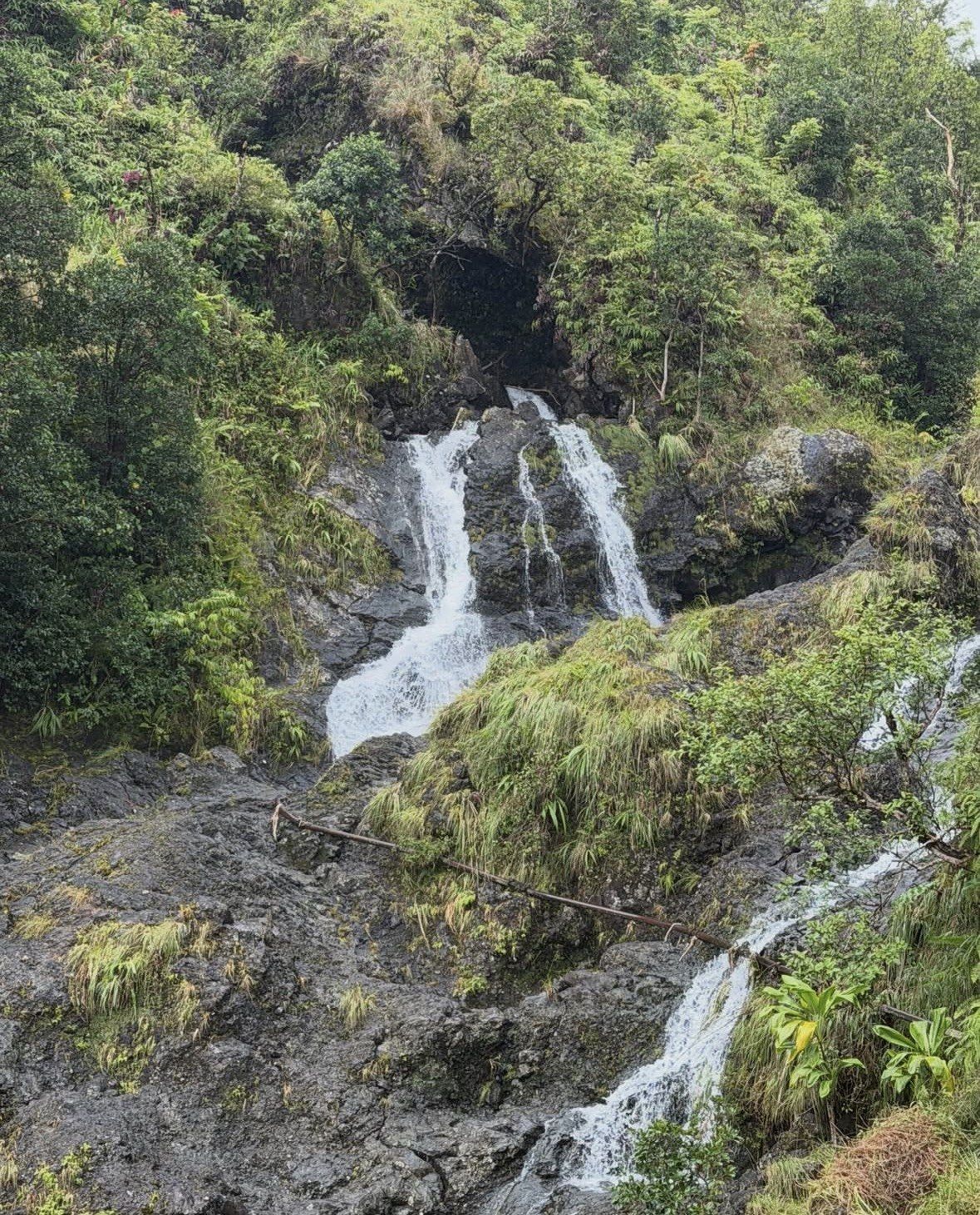
| Puaa Kaa State Wayside | Daylight hours | No entrance charge | Small waterfalls and pools across 5.0 acres |
|---|
| Waianapanapa State Park | 7:00 a.m. to 6:00 p.m. | Reservation required for both entry and parking | Hala forest, heiau, sea stacks, blow holes, natural stone arch, seabird colony, small black sand beach |
|---|
Half day, private vehicle, parking sorted
This 4 to 5 hour private trip starts at Island Fresh Cafe in Paia with reserved secure parking, so the day begins in a legal stall rather than on a verge, and the vehicle is yours for the stops you choose.
★ 4.9/5 · 127 reviews
One lane bridge rules on Maui: how to take your turn
Of the 59 bridges on the Hana Highway, 46 are only one lane wide, which is why oncoming traffic has to take turns. The working convention is simple: the car that reaches the approach first goes, you stop short of the deck rather than creeping onto it, and you cross one vehicle at a time. A raised hand from the other driver means go. Give it back when it is your turn to wait.
Do not stop on a bridge, and do not get out on one. The deck is the whole road at that point, and these are old structures, built between 1908 and 1947 and listed as a historic district since 15 June 2001. If the view from the bridge is the view you want, park in a legal stall and walk back.
Let residents through. A pickup that has been behind you through four curves is not sightseeing, and the polite move is to pull into the next designated stall or marked pull-off and wave it past rather than hold a line of local traffic at 15 mph. The same applies at the single-lane sections past Hana, where the National Park Service tells drivers to obey the blow horn signs, honk, listen for other horns, proceed slowly, and switch headlights on in cloud or rain.
Expect flaggers midweek. Three daytime work zones are posted by Hawaii's transport department at the moment: Waikamoi at mile markers 9.79 to 10, Keanae at 13.9 to 14.2 beside Honomanu Bay, and Wailua at 19.5 to 19.6, each running one alternating lane from 7 a.m. to 5 p.m. on weekdays, with roving shoulder work from 12:30 a.m. to 11 a.m. across five other segments. Wait where the flagger tells you to wait.
Streams, waterfalls and places that are not open to visitors
Water is where the code of conduct is least negotiable: do not enter streams during heavy rain or flash-flood conditions. A rise of 4 feet in 10 minutes is what the National Park Service puts on record for the streams of East Maui, and its hazard list for the pools and gulches runs to leptospirosis, E. coli and rock falls under waterfalls. June is the driest month at the Hana gauge and still averages 4.08 inches, so a dry stream bed is a temporary state.
Twelve miles past Hana town, in the Kipahulu District, entry into the Pools of Oheo is off the table altogether; you take them in from the Kuloa Point Trail, 0.5 miles in total with 80 feet of climb. Wading elsewhere in the district is not recommended, closed areas are closed, and emergency medical help is at least an hour away. Sturdy shoes are the park's own recommendation for trails that are steep with loose rock.
On land, the rule about unsigned sites covers more than it sounds like. Several of the better-known swimming spots and lookouts on this road sit on or past private land with no welcoming signage, and the correct response is to keep driving. Kahanu Garden, Garden of Eden and the state waysides exist precisely because they are set up to receive you.
Noise, cameras and buying from the people who live there
The valleys between Huelo and Hana are residential. Keanae and Wailua are villages with houses, churches and working taro fields, and the Wailua Valley wayside looks straight down onto them. Keep voices and car doors quiet early in the morning, leave the stereo inside the vehicle, and point your camera at the coast and the taro rather than into yards, houses and front rooms. If someone is working in a lo'i, ask before you photograph them, and accept no.
Spending is the part of the code of conduct nobody minds. At Keanae, a left turn just after mile marker 16 brings you to Aunty Sandy's banana bread, which trades Monday to Saturday from 8:30 a.m. to 2:30 p.m. Coconut Glen's coconut-milk ice cream sits at mile marker 27 and a half. Past mile marker 31, Hana Farms keeps its roadside stand at 2910 Hana Highway open Saturday to Thursday from 9 a.m. to 5 p.m., and until 8 p.m. on Fridays. Once you are in town, Hana Fresh at 4590 Hana Highway draws on a planting of more than 100 varieties of vegetables, fruits, herbs and traditional Hawaiian crops, and Friday afternoons bring the Hana Farmers Market to Hana Town Center from 2:30 to 5:30 p.m.
Carry your rubbish out with you. There is no food or gas for sale in the Kipahulu District, and the far end of the road has no services to absorb what a few hundred cars a day leave behind.
Why the state points visitors toward permitted guided travel
Hawaii's official tourism page does not present the guided option as a luxury. It explicitly encourages visitors to do this road as a permitted guided tour rather than drive it themselves, and the reason sits in the same paragraph as the code of conduct: 620 curves, one-lane bridges and hairpin turns, on a route the authority itself rates at two to four hours each way for 52 miles.
The permitting shows up in the fee schedules. Commercial PUC-permitted vehicles pay $25 at Waianapanapa State Park for 1 to 7 passengers, $50 for 8 to 25 and $90 for 26 or more, against $10 for a non-commercial vehicle, and commercial road-based vehicles pay $45 to enter Haleakala National Park. A permitted operator is inside those systems, holds the reservations and knows which stalls are legal at each stop.
Take a guided tour if the code of conduct reads like a lot to keep track of while reading oncoming traffic on a one-lane deck, if you are one or two people, if anyone in the party is a nervous driver, or if this is your only free day in a wet forecast. A driver who runs this road weekly already knows where to pull in, where not to, and who to let past.
Questions people ask
Is it acceptable to stop on a one-lane bridge for a photo?
No. On 46 of the 59 bridges the deck is the entire road, so a stopped car holds up every vehicle in both directions, residents included. Cross the bridge, find a designated stall, and walk back if the shot matters. Getting out of the vehicle on a bridge is the single most disruptive thing visitors do on this route.
What should I do when a local driver comes up behind me?
Pull in at the next designated stall or marked pull-off and let them past. The Hana Highway is the only road to work, school and the shops for the valley communities, and the pace a visitor wants is not the pace a resident needs. Do not brake on the carriageway or try to speed up to keep ahead.
Do the rules change once I reach Haleakala National Park?
They get stricter. Entry into the Pools of Oheo at Kipahulu is not permitted on safety grounds, and the viewing is done from the Kuloa Point Trail; the park service advises against wading in the district's streams and expects closed areas to be left alone. Nothing is sold in the park, neither gas nor food, though you can refill a bottle at the Kipahulu Visitor Center, and the nearest emergency medical help is an hour or more away.
Are there rules about sunscreen and insect repellent?
Mineral sunscreen is what NOAA points to for reef protection, and it names oxybenzone, octinoxate and octocrylene among the filters that can harm corals; sun shirts and shade between 10 a.m. and 2 p.m. get the same endorsement. For mosquitoes, Hawaii's health department points to an EPA-registered repellent at 20 to 30% DEET, or picaridin, oil of lemon eucalyptus or IR3535, worn with light-coloured long sleeves, because dark colours draw the insects in.
Does a guided tour handle the Waianapanapa reservation system?
A reservation covers both entry and parking at Waianapanapa, each date goes on sale 30 days ahead at midnight Hawaii Standard Time, nothing is sold on the day itself, and the gate stops admitting at 5:30 p.m. Several tours on this site settle the park fees as part of the day, including the 8 to 10 hour small group trip, which lists all fees and taxes as included. That removes the midnight booking alarm from your planning.
Read also